

Best Online Clothing Shops With Returns in 2026
Table of Contents
- What Makes a Clothing Shop Worth Buying From
- How to Check the Return Policy Before Buying Clothes
- Tips for Finding the Right Size When Shopping Online
- Benefits of Shopping at Curated Online Boutiques
- Shipping, Payment, and Quality: What Else Sets Online Clothing Shops Apart
- Reverse Logistics and Sustainable Returns at Online Clothing Shops
- Conclusion: Choosing the Best Online Clothing Shops With Returns for You
- Frequently Asked Questions
Last Updated: September 27, 2026
What Makes a Clothing Shop Worth Buying From
A clothing shop earns your trust when it removes risk from the purchase. That means a clear return policy, honest sizing information, and support you can actually reach.
How to Check the Return Policy Before Buying Clothes
The fastest way to check a return policy is to find the window, the cost, and the condition rules before you add anything to your cart. If those three answers aren't easy to find, that silence is your answer.
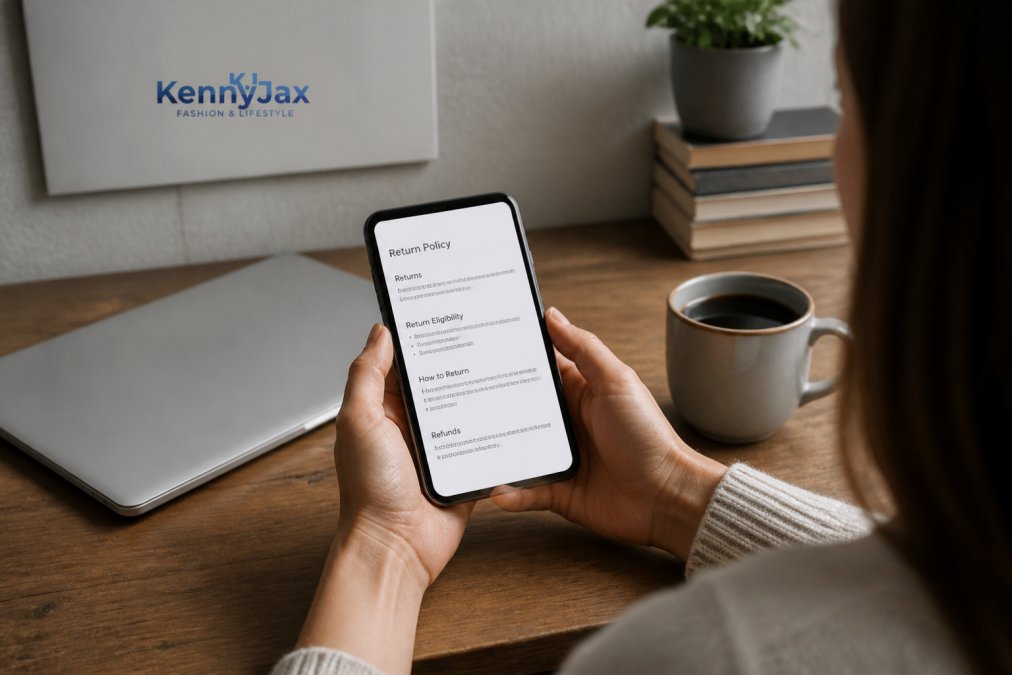
Look for these specific details:
- Return window: How many days from delivery, not from order date
- Who pays return shipping: A prepaid return label means the shop covers it
- Condition rules: Tags attached, unworn, original packaging
- Refund vs. store credit: These are not the same thing
- Restocking fees: A fee can quietly eat a chunk of your refund
- Refund processing time: How long after the shop receives the item
How to Read a Return Policy in Under Two Minutes
Open the policy page and search the text (Ctrl+F or Cmd+F) for these four words in order: "days," "shipping," "condition," "refund." Each hit tells you one of the four answers you need. If a policy buries the return window three clicks deep or only shows it after checkout, treat that as a red flag, the FTC's Mail, Internet, or Telephone Order Merchandise Rule requires sellers to disclose refund and return terms before purchase, so a shop that hides them is already out of step with basic consumer-protection expectations.
The Numbers That Actually Matter
Return windows cluster into three buckets, and the bucket tells you how much the shop trusts its own fit:
- 14 days or less: Common with fast-fashion and flash-sale sites. Tight windows push you to decide fast, which works against you if a gift sits unopened.
- 30 days: The industry default. Most mainstream apparel retailers land here, and it's usually counted from delivery, not order date.
- 60 to 90 days: Less common, and typically a signal that the shop is confident in sizing or is competing on service. A handful of large retailers and warehouse clubs sit in this range.
The Three Traps That Cost You Money
- Restocking fees. Some retailers deduct a percentage of the item price when you return certain categories, electronics, formalwear, or items sold as "final sale." A 15% restocking fee on a $120 dress is $18 gone before shipping.
- Return shipping deducted from your refund. "Free returns" sometimes means "we'll print the label, but we'll subtract the cost from your refund." Read the sentence that follows the phrase "free returns", that's where the catch lives.
- Store credit disguised as a refund. If the policy says "refund" in the headline but "store credit" in the body, you're getting a gift card, not your money back. Those are not interchangeable if you never plan to shop there again.
A return policy is the written set of rules a retailer follows when you send an item back, covering the time limit, condition requirements, and how your money comes back. Read it before checkout, not after.
A Quick Legitimacy Check Before You Trust Any Policy
A written return policy is only useful if the shop is real. Run this checklist before your first order from an unfamiliar site:
- A physical business address on the contact page, not just an email form
- A phone number or live chat that reaches a human during business hours
- Reviews on a third-party site (Trustpilot, the Better Business Bureau, Reddit threads), not just testimonials hosted on the shop's own domain
- Reverse image search on a product photo; if the same image appears on five unrelated sites, it's likely stolen
- A real return address in the policy, scam sites often omit it because there's nowhere to send the item back
Tips for Finding the Right Size When Shopping Online
Sizing accuracy starts with your own measurements, not the size label you wear at other stores. Take your bust, waist, and hip measurements with a soft tape, then compare them to the shop's own fit guide.
A few habits cut returns dramatically:
- Check the fit guide on every product page, since sizing varies by brand and cut
- Read reviews that mention fit, especially from shoppers with your body type
- Look for model measurements and the size the model is wearing
- When you're between sizes, size up on structured pieces and down on stretch fabrics
- Save your measurements in a notes app so you don't re-measure every order
Benefits of Shopping at Curated Online Boutiques
Curated online boutiques solve a specific problem: too much choice. Instead of scrolling thousands of near-identical listings, you browse a smaller set that someone already vetted for quality and style.
The benefits show up in a few places:
- Quality control: Someone handles the buying decision, so cheap fabric rarely makes the cut
- Staple pieces: A good boutique stocks basics that work with what you own
- Personal service: Customer support is often the owner or a small team
- Faster answers: Questions about fit or fabric get a real reply, not a script
- Consistent sizing: A tight edit means fewer surprises between items
Shipping, Payment, and Quality: What Else Sets Online Clothing Shops Apart
Free shipping only counts if it's actually free at checkout. The shops worth your money state delivery timelines up front and don't add handling fees at the last step.
| What to Check | Green Flag | Red Flag |
|---|---|---|
| Shipping cost | Free at checkout | Fees added at payment |
| Delivery time | Stated in days | "Varies" or vague |
| Return shipping | Prepaid return label | You pay both ways |
| Refund type | Original payment | Store credit only |
| Support | Real reply, fast | No contact info |
| Payment | Secure gateway | Odd or off-site checkout |
Reverse Logistics and Sustainable Returns at Online Clothing Shops
Reverse logistics is the process of moving a returned item from your doorstep back into sellable stock. It covers the prepaid return label, the transit, the inspection, and the decision to restock, refurbish, or resell. Most shops mention "easy returns" and stop there, the actual mechanics are where the money and the waste live.
The Return Journey, Step by Step
Here's what happens to a garment after you drop it in the mail, and where each step can go wrong for you:
- You request the return. You enter an order number on the shop's portal or reply to a confirmation email. Some shops issue a prepaid label instantly; others make you email support and wait. A slow label is a slow refund.
- The carrier picks it up or you drop it off. Prepaid labels are usually tied to one carrier (UPS, USPS, or FedEx). If the nearest drop-off is 20 minutes away, that's a real cost in time even when shipping is "free."
- The package arrives at a returns center. This is the bottleneck. A shop with one warehouse processes returns in days; a shop that routes returns through a third-party facility can take a week or more just to open the box.
- Inspection. A worker checks tags, wear, odors, and damage. This is where "unworn with tags" gets enforced, and where disputes start if a shop claims an item was worn when it wasn't.
- The decision: restock, refurbish, or liquidate. Items in perfect condition go back on the shelf. Slightly damaged items may be cleaned and sold as open-box. The rest get bundled and sold to liquidators, often for pennies on the dollar.
- Refund issued. This is the step shoppers care about most, and it's usually the slowest. Many shops issue the refund only after inspection, not when the carrier scans the package.
Why This Matters for Sustainability
Every returned item that can't be resold becomes waste. The EPA's textile waste data shows millions of tons of clothing end up in landfills each year, and returns are a meaningful slice of that, especially for online orders, where return rates run higher than in-store because shoppers can't try items on first.
- Fast restocking: An item back on the shelf in a week is inventory; the same item sitting in a warehouse for a month is often written off.
- Consolidated returns: Some shops let you batch multiple items into one shipment, cutting the number of individual packages and the associated emissions.
- Resale and refurbishment programs: A growing number of retailers resell returned items through their own outlet channels rather than shipping them to liquidators.
The Trade-Off Shoppers Rarely Hear About
"Free returns" isn't free, someone pays, and it's usually baked into the price of everything else on the site. A shop that offers generous, no-questions returns is often pricing that generosity into its margins. That's not a reason to avoid it; it's a reason to understand what you're paying for. A shop with a tight 14-day window and a restocking fee is passing the cost back to you directly.
A Legitimacy Check Worth Running First
Before you trust any shop's return process, confirm the shop is real. Look for a physical business address, working contact details, and reviews outside the shop's own site. Scam boutiques often copy product photos and skip the return policy entirely, which means there's no reverse-logistics process at all, just a dead end.
Conclusion: Choosing the Best Online Clothing Shops With Returns for You
Finding the best online clothing shops with returns comes down to risk. A shop that publishes a clear policy, ships free, and answers your questions is a shop you can order from with confidence.
Frequently Asked Questions
Which online stores have the best return policies?
The best return policies offer free returns with a prepaid label, a return window of at least 30 days, and a clear process for refunds or exchanges. Look for stores that provide a full refund to your original payment method, no restocking fees, and easy online initiation. Curated boutiques like KennyJax often stand out with free returns and a simple, customer-friendly process.
What is the 3-3-3 rule for clothes?
The 3-3-3 rule is a guideline for building a versatile wardrobe: you should be able to create at least 3 outfits from each new item, the item should work for 3 different occasions, and it should last for at least 3 years. This rule helps you avoid impulse purchases and focus on staple pieces that offer real value, especially when shopping online where you can't try items on first.
What should I look for in an online store's return policy?
Check the return window (30 days is standard), who pays return shipping (look for prepaid labels), whether you get a refund or store credit, and if there are restocking fees. Also review the condition requirements (tags attached, unworn) and the refund processing time. A transparent policy with no hidden fees is a sign of a reliable online clothing shop.
Are there online boutiques that offer free return shipping?
Yes, many curated online boutiques offer free return shipping as part of their customer satisfaction guarantee. KennyJax, for example, provides free returns with a prepaid label, making it risk-free to try items at home. Always confirm the details on the store's website before ordering, as some shops may have exceptions for final sale items.