

How to Check Clothing Quality Online: 2026 Guide
Table of Contents
- Why Checking Clothing Quality Online Is Different
- The Digital Quality Audit: 7 Checks Before You Buy
- How to Read Clothing Labels for Quality
- Signs of Poor Quality Clothing in Online Listings
- Best Fabric Types for Durability
- Evaluating Construction Details from Photos
- Post-Purchase Quality Verification
- Conclusion
- Frequently Asked Questions
Last Updated: September 18, 2026
Why Checking Clothing Quality Online Is Different
Checking clothing quality online is harder than judging a garment in your hands. You cannot feel the fabric, stretch a seam, or hold a shirt to the light. Instead, you work from photos, product pages, and reviews.
The Digital Quality Audit: 7 Checks Before You Buy
A digital quality audit is a step-by-step review of an online listing that replaces the in-store touch test. It uses photos, descriptions, labels, and policies to judge a garment before you order.
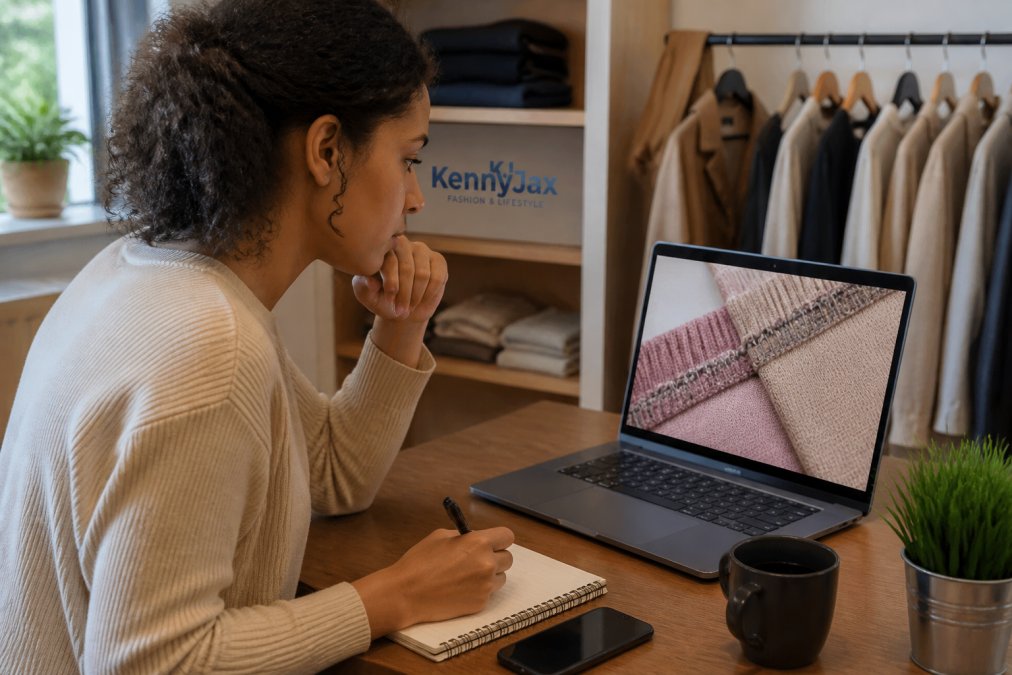
Run these seven checks in order:
- Zoom in on product photos
- Read the full product description
- Scan reviews for fit and fabric notes
- Check the return policy
- Read the fiber content label
- Study construction details in close-ups
- Compare the listed measurements to your own
Zoom In on Photos and Product Descriptions
Zoomed photos are your best substitute for touch. Look for close-ups of fabric texture, seams, and buttons. A listing that only shows full-body shots is hiding something.
Check the description for specifics:
- Fiber content with percentages
- Fabric weight, often listed as GSM (grams per square meter)
- Stitching details like serged edges or hem finishing
- Care instructions and washing guidance
Reading Reviews and Return Policies
Reviews reveal what photos cannot. Search reviews for words like "pilling," "shrunk," "scratchy," or "colorfastness." Patterns across many reviews matter more than one angry post.
How to Read Clothing Labels for Quality
Reading a clothing label is the fastest way to judge quality, but online, you rarely get a clean photo of it. The label is usually buried in the last product image, sideways, or missing entirely. Treat that as your first signal: a listing that hides the fiber label is usually hiding the fiber content.
When you do find the label, extract four things:
- Fiber content with percentages, not just "cotton," but "95% cotton, 5% elastane"
- Care instructions, wash temperature, drying method, ironing
- Country of origin, a clue to labor standards and typical construction norms
- Manufacturer or RN number, the RN (Registered Identification Number) is issued by the Federal Trade Commission and can be looked up to confirm the actual business behind the brand
Decoding Fiber Content
Fiber content decides how a garment feels, wears, and lasts. The order matters: fibers are listed by weight, so the first name is the dominant one. "60% polyester, 40% cotton" is a polyester shirt with a cotton accent, not the reverse.
Use this quick read:
- 100% cotton, linen, or wool, predictable behavior, ages well, easier to repair
- Cotton-poly blends, wrinkle resistance at the cost of breathability and pilling risk
- High spandex content (over 5%), stretch that often sags out over time
- "Viscose," "rayon," "modal," "lyocell", semi-synthetics from wood pulp; soft but prone to shrinking and pilling when wet
- "Other fiber" or no percentages, a red flag; the FTC's textile labeling rules require disclosure, so a missing label usually means a non-compliant or drop-shipped product
Reading Care Symbols and Instructions
Care instructions are a durability forecast. A garment that demands dry cleaning will not survive a normal laundry routine, and "hand wash cold, lay flat to dry" on a t-shirt is a warning that the fabric is unstable.
Common signals:
- "Machine wash cold, tumble dry low", the most forgiving, most durable category
- "Dry clean only" on a casual piece, usually means the fabric will distort or bleed
- "Do not bleach" on white cotton, often a sign of unstable dyes
- No care instructions at all, walk away; every textile sold in the U.S. is required to carry them under FTC rules
Finding the Label in Online Listings
- Open every product photo and zoom to the neckline, side seam, and hem, that is where tags sit.
- Check the "Details" or "Specifications" tab; many retailers transcribe fiber content there even when the photo is unreadable.
- Search the reviews for the word "label", buyers often photograph it in their own review images.
- If the listing shows a size chart but no fiber content, message the seller before buying. A vague or slow answer is itself a quality signal.
A label that lists exact percentages and realistic care instructions tells you more than any marketing copy on the page.
Signs of Poor Quality Clothing in Online Listings
Poor quality shows up in patterns, not single flaws. One blurry photo means little. Five blurry photos mean the seller is hiding the product.
Watch for these warning signs:
- Only one angle, or no close-ups
- No fabric weight or fiber details
- Reviews that mention pilling, fading, or shrinking
- No return policy, or a strict one
- Prices that seem too low for the materials claimed
Best Fabric Types for Durability
Durability comes down to three variables: fiber, weave, and weight. Most guides stop at fiber. Online, the other two are where you actually gain an edge, because they are the details sellers most often omit, and the ones you can still infer from a listing.
| Fabric | Durability | Best For | Watch Out For |
|---|---|---|---|
| Cotton (heavyweight) | High | Everyday shirts, denim | Shrinking without pre-shrinking |
| Linen | Medium-High | Summer wear | Wrinkles easily |
| Wool | High | Sweaters, outerwear | Needs careful washing |
| Polyester blends | Medium | Activewear, budget pieces | Pilling over time |
| Silk | Low-Medium | Dressy pieces | Delicate, fades in sun |
Judging Fabric Weight from a Product Page
Fabric weight is measured in GSM (grams per square meter) or, for denim and heavier wovens, in ounces per square yard. Higher GSM generally means denser, more durable fabric with better drape, but only within the same fiber family. A 180 GSM cotton t-shirt is substantial; a 180 GSM linen shirt is still breezy.
Rough benchmarks to compare listings against:
- Lightweight t-shirts: 140-160 GSM, thin, prone to transparency
- Midweight t-shirts: 180-220 GSM, the durable everyday range
- Heavyweight t-shirts: 240+ GSM, structured, slow to wear out
- Denim: 12-14 oz is standard; 14 oz and up is heavy-duty
- Sweatshirts: 300+ GSM for a substantial feel
Weave and Knit: The Hidden Durability Variable
Two shirts can share identical fiber content and differ wildly in lifespan because of how the yarn is structured.
- Twill (denim, chinos), diagonal weave, dense and abrasion-resistant
- Plain weave (poplin, broadcloth), lightweight, prone to fraying at stress points
- Satin, smooth but snag-prone; watch for pulled threads in photos
- Jersey knit (most t-shirts), stretches and recovers; quality depends on yarn length
- Rib knit (cuffs, necklines), should snap back when stretched; if a listing shows a stretched-out collar in the model photo, that is a tell
Natural vs. Synthetic Fibers
Natural fibers come from plants or animals: cotton, linen, wool, silk. Synthetic materials come from chemicals: polyester, nylon, acrylic, spandex.
Each has trade-offs:
- Natural fibers breathe better and feel softer over time. They also cost more and need more care.
- Synthetic materials resist wrinkles and dry fast. They can trap heat and pill with wear.
The Sustainability vs. Durability Trap
- Does the listing publish GSM or fabric weight?
- Is the fiber content specific ("100% organic cotton") or vague ("eco-blend")?
- Do reviews mention longevity, or only ethics?
- Is there a repair or take-back program? That signals the brand expects the garment to last.
When a listing gives you fiber, weight, and weave, you can predict durability almost as well as holding the fabric. When it gives you only fiber, you are guessing.
Evaluating Construction Details from Photos
Construction details separate a well-made garment from a cheap one. Zoom in and study the seams, buttons, and finishing.
Check these spots:
- Seams: even stitching with no loose threads
- Stitching tension: tight and consistent, not wavy
- Buttons: securely sewn, with a spare included
- Buttonhole integrity: clean edges, no fraying
- Hem finishing: straight and even
- Lining quality: smooth, not bunching
Post-Purchase Quality Verification
Post-purchase quality verification is what you do in the first week after a garment arrives. It confirms the listing matched reality and protects your return window.
Run this quick check when your order lands:
- Compare the fiber label to the listing
- Check the seams and buttons in person
- Try it on and move around in it
- Wash one piece first to test for shrinking or fading
- Note any gaps before the return window closes
Conclusion
Judging quality from a screen takes practice, but the checks above turn guesswork into a routine. Zoom in, read labels, scan reviews, and verify when the package arrives.
Frequently Asked Questions
What is the 3-3-3 rule for clothes?
The 3-3-3 rule is a guideline for building a versatile wardrobe: 3 tops, 3 bottoms, and 3 pairs of shoes that can mix and match to create multiple outfits. It encourages buying fewer, higher-quality items that work together. When shopping online, use this rule to focus on timeless pieces with durable fabrics and solid construction, rather than trendy items that may not last.
How can I tell if a garment is well-constructed from online photos?
Look for close-up photos that show stitching, seams, and hardware. Check for even, tight stitches without loose threads. Seams should be straight and flat, with no puckering. Buttons and zippers should look secure. Also, read the product description for details on fabric weight (GSM), seam types, and lining. If the brand provides multiple angles and detail shots, it's a good sign of transparency.
What's better, 100% cotton or 100% polyester?
It depends on the use. Cotton is breathable, soft, and biodegradable, but it can shrink and wrinkle. Polyester is durable, wrinkle-resistant, and quick-drying, but it's less breathable and made from petroleum. For everyday wear, cotton is often preferred for comfort. For activewear or items needing durability, polyester or blends work well. Check the care label and consider how you'll wear the garment.
How do I verify clothing quality after it arrives?
Inspect seams for even stitching and no loose threads. Check buttons and zippers for secure attachment. Feel the fabric for weight and softness. Wash the garment according to care instructions and see how it holds up. If it pills, fades, or shrinks excessively, it's low quality. Also, compare the actual item to the online photos. If it doesn't match, return it. KennyJax offers free returns, making it easy to verify quality risk-free.