

How to Find Accurate Sizing Charts: 2026 Fit Guide
Table of Contents
- Why Accurate Sizing Charts Matter More Than Ever
- What You'll Need Before You Start
- How to Measure Your Body for Clothing
- How to Read Garment Measurements Like a Pro
- Where to Find Accurate Sizing Charts Online
- Tips for Buying Clothes Online Without the Guesswork
- Common Sizing Chart Mistakes to Avoid
- Conclusion
- Frequently Asked Questions
Last Updated: September 25, 2026
Why Accurate Sizing Charts Matter More Than Ever
Online shopping has a fitting problem, and it costs everyone. Many shoppers find that ordering two or three sizes of the same item just to keep one is the only way to guarantee a fit. That habit gets expensive fast.
What You'll Need Before You Start
You need three things to measure yourself properly, and none of them cost much.

- A soft cloth measuring tape, not a metal tape
- A full-length mirror, or a friend to help
- Form-fitting clothing, like a fitted tee and leggings
- A notepad or phone for recording numbers
How to Measure Your Body for Clothing
Measuring your body for clothing takes about five minutes if you know the right points. The goal is a set of numbers you can compare against any brand's chart.
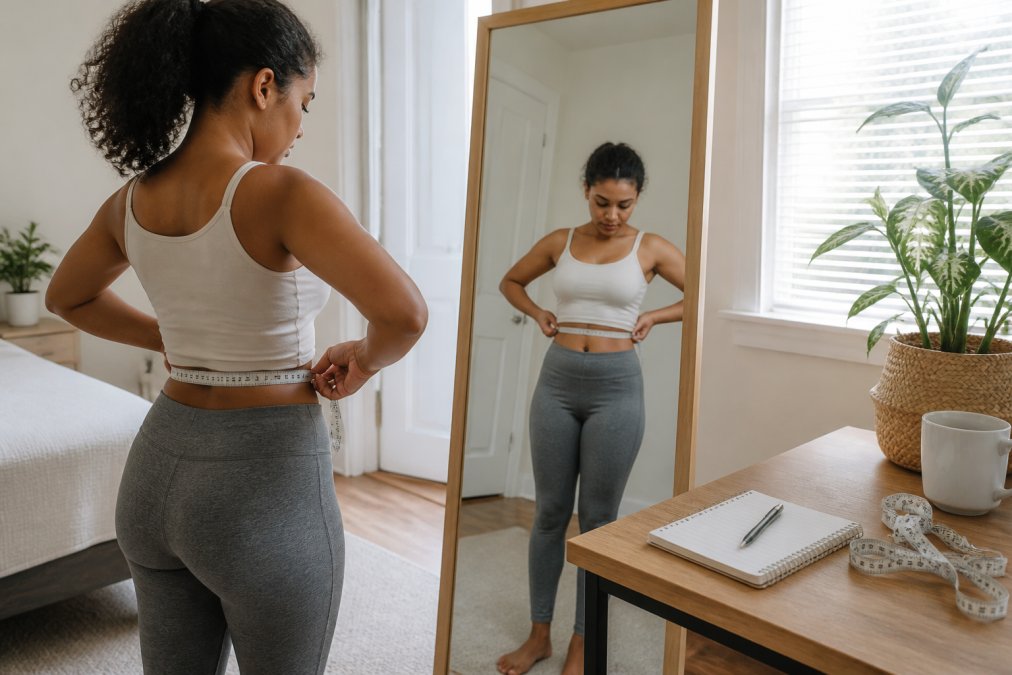
Bust, Waist, and Hip Measurements
Wrap the tape around the fullest part of your bust, keeping it level. For your natural waistline, find the narrowest point, usually just above your belly button. For hip circumference, measure around the fullest part of your hips and seat.
Inseam, Sleeve, and Torso Length
Inseam length runs from your crotch seam to your ankle bone. For sleeve length, start at the shoulder point and measure to your wrist. Torso length goes from your shoulder down to your natural waist.
How to Read Garment Measurements Like a Pro
Garment measurements describe the clothing itself, not your body. A shirt labeled "bust 40 inches" means the fabric measures 40 inches around, not that it fits a 40-inch bust. The difference between those two numbers is called ease, and ease is where most sizing decisions are actually won or lost.

Flat-Lay Measurements vs. Body Measurements
Flat-lay numbers come from a garment laid flat and measured across, then doubled. Body measurements come from a tape around your actual body. Mixing the two without converting is the single most common chart-reading error.
| Measurement Type | What It Measures | How to Compare |
|---|---|---|
| Body measurement | Your actual body | Use for size chart match |
| Flat-lay (doubled) | Garment circumference | Compare to body + ease |
| Flat-lay (single) | Half the garment | Double it first |
| Garment with stretch | Fabric circumference at rest | Compare to body minus stretch allowance |
How Fabric Composition Changes the Math
This is the part most guides skip, and it is the reason two garments with identical chart numbers can fit completely differently.
Fit Types and What They Do to the Chart
Fit labels, slim, regular, relaxed, oversized, are not marketing fluff. They describe how much ease the brand built in, and they change how you should read the same chart.
- Slim fit carries minimal ease, often 1 to 2 inches at the chest or waist. Size up if you are between sizes or prefer breathing room.
- Regular fit carries moderate ease, roughly 3 to 4 inches at the chest. This is the safest default when a chart is ambiguous.
- Relaxed fit carries generous ease, often 5 inches or more. You can usually size down without losing comfort.
- Oversized fit is intentionally cut well beyond body measurements. Do not size up; the garment is already doing that for you.
The Return-Proof Flat-Lay Check
Before you order, run a two-minute cross-check that catches most bad size calls.
- Pull your best-fitting garment of the same type out of your closet.
- Lay it flat and measure it the same way the brand measures theirs, usually armpit to armpit, then doubled.
- Write that number down. This is your real-world reference, not a chart's guess.
- Compare it to the product page's flat-lay number for the size you are considering.
- If the product number is within about an inch, order that size. If it is more than two inches off, move up or down a size.
Where to Find Accurate Sizing Charts Online
The most accurate sizing charts live on the product page itself, not in a brand's general help section. A sitewide "size guide" link often shows a generic chart that has not been updated for the specific garment you are viewing. The product-page chart, by contrast, is tied to that exact cut, fabric, and production run.
How to Tell a Trustworthy Chart from a Decorative One
Not every chart deserves your trust. A few signals separate the useful ones from the filler.
- It lists garment measurements, not just S/M/L. A chart that only maps letters to body ranges is a starting point, not a precision tool.
- It states the unit. Inches and centimeters are not interchangeable, and a chart that omits the unit is a red flag.
- It includes a measurement diagram. A small illustration showing where the tape goes removes ambiguity about whether "length" means from the shoulder or from the high point.
- It names the fabric. Stretch percentage and composition belong next to the chart, not buried in a separate tab.
- It was updated recently. Fashion sizing drifts. A chart with no date or a date several seasons old may not match current stock.
Virtual Fitting Tools and AI Size Scanners
Manual measurement is still the most reliable method, but a growing category of digital tools can shortcut the process, and most sizing guides ignore them entirely.
- Brand-native fit finders. Many retailers now embed a short quiz that asks your height, weight, usual size, and fit preference, then recommends a size based on return data from other shoppers. These work best when the brand has a large customer base to draw from.
- AI body-scanning apps. Some apps use your phone camera to estimate shoulder width, chest, waist, and hip measurements in a few seconds. Accuracy varies, and results are usually within an inch or two rather than exact, but they are useful as a starting reference.
- Virtual try-on and 3D avatars. A few retailers let you enter your measurements and see a rendered garment on a body model close to your proportions. This is most helpful for silhouette and length, less so for precise circumference.
- Cross-brand size translators. Some tools take your measurements and map them across multiple brands' charts at once, which is useful when you shop the same category across several retailers.
When to Skip the Chart and Ask
Some garments resist charts entirely: made-to-order pieces, heavily draped styles, and anything with asymmetric construction. In those cases, a quick message to customer service asking for the flat-lay measurement of a specific size is faster than guessing. A brand that can answer that question quickly is usually a brand that knows its own product, and that is its own kind of sizing signal.
Tips for Buying Clothes Online Without the Guesswork
Buying clothes online gets easier when you treat sizing like a checklist, not a gamble.
- Measure yourself once and save the numbers
- Read the size chart on the exact product page
- Check fabric composition for stretch
- Compare garment measurements to your body plus ease
- Read fit notes: slim, regular, or oversized
- Check the return policy before ordering
- Order one size when the chart is clear
Common Sizing Chart Mistakes to Avoid
The same errors show up again and again, and each one is avoidable.

- Measuring over bulky clothing instead of form-fitting layers
- Holding the tape too loose or too tight
- Comparing body measurements to flat-lay numbers without doubling
- Trusting a generic brand chart over the product-specific one
- Ignoring vanity sizing, where a "medium" varies by brand
- Skipping the fabric composition and stretch details
Conclusion
Sizing confusion is frustrating, but it's solvable with a tape measure and five minutes of your time. Once you know your numbers and how to read garment dimensions, online shopping stops being a guessing game.
Frequently Asked Questions
Are clothing size charts actually accurate?
They are accurate as a starting point, but only if you compare your own measurements to the chart rather than trusting the size label you usually buy. Brands use different size tolerances and some practice vanity sizing, which shifts a size 8 into what used to be a size 10. Always measure your bust, waist, and hips, then match those numbers to the specific chart for that garment. If your measurements fall between two sizes, size up for a looser fit or down for a closer one.
What should I do if my measurements fall between two sizes?
Check the garment's fit description first. A regular fit usually has room to size down, while a slim fit may run tight, so sizing up prevents pulling at the seams. Look at the fabric too: polyester and elastane blends stretch, while non-stretch cotton holds its shape. When in doubt, size up and use free returns if it does not work. KennyJax offers free returns, so you can try both sizes and send back the one that misses.
How do I measure myself correctly for online shopping?
Wear form-fitting clothing and stand relaxed with your feet together. Use a cloth measuring tape held parallel to the floor. Measure your bust at the fullest part, your natural waistline at the narrowest point above the belly button, and your hip circumference at the widest part. Keep the tape snug but not tight. Write each number down and compare it to the size guide on the product page before ordering.
Is a 32-inch waist always a size 32?
No. A 32-inch waist measurement does not guarantee a size 32 in every brand. Some labels use vanity sizing, meaning a size 32 may actually measure 34 or 35 inches. Others follow standardized sizing closer to true measurements. This size discrepancy is why reading the actual garment dimensions matters more than trusting the number on the tag. Always check the size chart interpretation for that specific item before you buy.