

Tips for Buying Clothes Online: A 2026 Fit Guide
Table of Contents
- How to Measure Yourself for Clothes Before You Buy
- Understanding Clothing Size Charts (and Why Your Usual Size Lies)
- How to Spot Quality Clothing Online: Fabrics, Stitching, and Photos
- Reading Customer Reviews Without Getting Fooled
- Returns, Shipping, and the Real Cost of Buying Clothes Online
- Virtual Try-On Tools and AI Sizing: What Actually Works in 2026
- Sustainable Shopping Filters and Post-Purchase Garment Care
- Frequently Asked Questions
Last Updated: September 11, 2026
How to Measure Yourself for Clothes Before You Buy
The single most effective habit for buying clothes online is to measure your own body and keep those numbers saved in your phone. According to consumer guidance from the Federal Trade Commission on online shopping, understanding sizing before you order is one of the best protections against the return-and-refund cycle that frustrates so many shoppers. This guide from KennyJax walks through the practical habits that separate a confident online purchase from a gamble.
If you have ever ordered your usual size and opened a package that fit nothing like the photo, you are not alone. Most sizing problems trace back to one mistake: trusting a label instead of a measurement.
The Three Numbers That Decide Every Online Fit
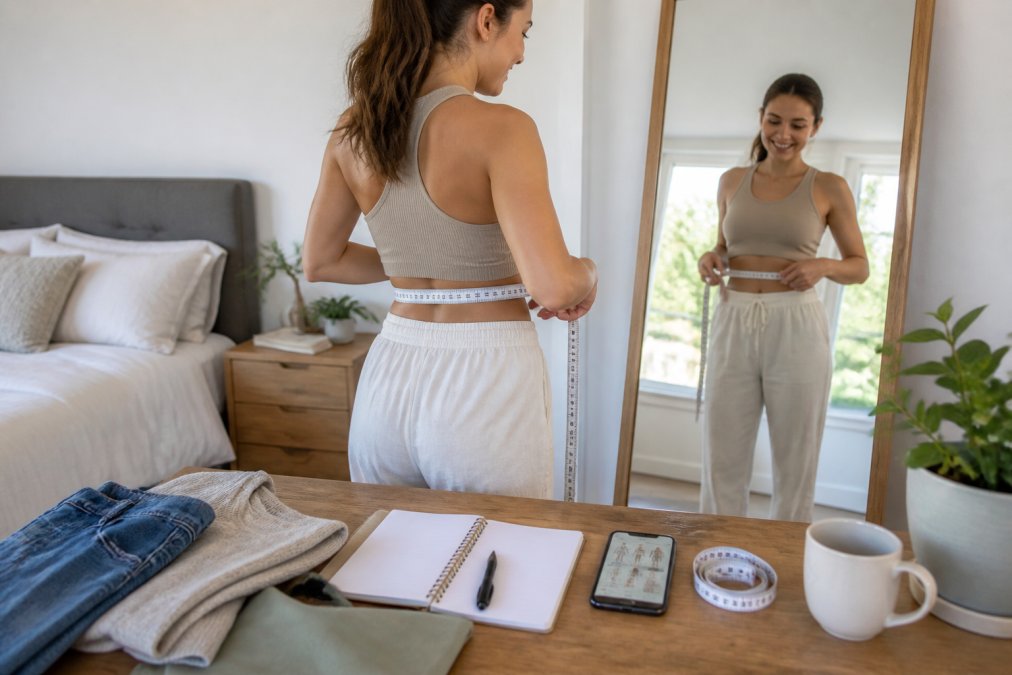
Body measurements are the foundation of every good online clothing purchase. You need three numbers: bust or chest, natural waist, and hip. Measure over light clothing, keep the tape level and snug but not tight, and write the numbers down.
A common mistake is measuring once and guessing forever. Bodies change. Re-measure every few months, and always check the specific size guide attached to the item you are considering, not a generic brand chart.
Understanding Clothing Size Charts (and Why Your Usual Size Lies)
A clothing size chart is a table that maps body measurements to a brand's letter or number sizes, and it varies wildly from one maker to the next. Your usual size is a habit, not a fact. One brand's medium is another brand's large.
Here is how to read a size guide without getting burned:
- Find the chart on the exact product page, not the homepage
- Match your largest measurement first, then adjust
- Check for a note about whether sizes run small or large
- Note the fabric: denim and structured cotton hold shape, knits relax
When to Size Up, When to Size Down
Size up when the fabric has no stretch, when the cut is slim, or when the chart shows your measurement at the top of a range. Size down only for relaxed, oversized styles where the intended look is loose. If you are between sizes on a fitted garment, always take the larger one. Tailoring a slightly big item is easy; adding fabric to a small one is not.

How to Spot Quality Clothing Online: Fabrics, Stitching, and Photos
Spotting quality online comes down to three checks: fabric composition, construction details in the photos, and the honesty of the product description. Zoom in on every image before you buy.
Look for these signals:
- Fabric composition listed as a percentage, not vague terms
- Close-up shots of seams, hems, and buttons
- Stitching that looks even and dense, not loose or skipped
- Color accuracy across multiple photos, not one heavily filtered shot
Natural fibers like cotton, linen, and wool breathe and age well. Blends with a little stretch add comfort. A description that names the fabric and explains the fit is a good sign; one that only says "premium quality" tells you nothing.
Reading Customer Reviews Without Getting Fooled
Reviews are useful, but only if you read them strategically. Sort by the lowest ratings first. That is where fit complaints, color mismatches, and fabric surprises live. A five-star review that says "love it" tells you less than a three-star review that explains exactly how the item ran.
Watch for these patterns:
- Repeated notes about sizing running small or large
- Complaints about color differing from the photo
- Praise or criticism that mentions a specific measurement
- Reviews that include their own photos
One detailed review about fit is worth more than fifty generic ones. If several reviewers mention the same issue, believe them.
Returns, Shipping, and the Real Cost of Buying Clothes Online
The listed price is not the real price until you factor in shipping, return postage, and the time cost of a return. A cheap item with a costly or slow return process can end up more expensive than a slightly pricier one with free returns and fast refunds.
Before you check out, confirm these seven things:
- Whether shipping is free or added at checkout, and whether there is a minimum order threshold
- Who pays return postage, the retailer, the customer, or a shared split
- Whether there are restocking fees, and what percentage they take
- Whether returns must be unworn with tags attached, or if try-on is allowed
- The return window in days, counted from delivery or from order date
- How refunds are issued, original payment method, store credit, or gift card
- Whether the retailer offers exchanges or only refunds
The Return Method Changes the Real Cost
How you send an item back matters as much as the policy itself. A prepaid label is convenient but the cost is often baked into the item price. A drop-off location is cheaper for the retailer and sometimes faster for you. A mail-back at your own expense can cost more than the item is worth on a low-priced purchase.
A common pattern: retailers advertise "free returns" but require the customer to pay return shipping on sale items or final-sale merchandise. Read the fine print on discounted items before you buy, because that is where the exceptions live.
Refund Timing and Your Budget
Refunds are not instant. Card networks and banks typically take several business days to post a credit after the retailer processes it, and some retailers only process refunds in batches (consumer.ftc.gov). If you are buying several sizes to try, that float can tie up real money for a week or more. Budget for it, or use a retailer that refunds quickly.
Cross-Border Orders: The Hidden Cost Most Guides Skip
If you order from a retailer based outside the country, the listed price usually excludes import duties, taxes, and customs brokerage fees. Those charges are assessed when the shipment enters the country, and the carrier often pays them upfront and bills you before delivery. A package can sit in customs for days while you sort out payment.
Before placing a cross-border order:
- Check whether the retailer collects duties at checkout (some do, which avoids surprises)
- Confirm the carrier's brokerage fee, which is separate from the duty itself
- Note that return shipping on cross-border orders is often expensive and sometimes not offered at all
- Understand that refunds on duties paid are difficult to recover
For anything you are unsure about, a domestic retailer with a clear return policy is usually the lower-risk choice.
Test a New Brand Cheaply
If you have never worn a brand, do not start with a full-price statement piece. Order one low-cost item first, a basic tee, a pair of socks, a simple top, to learn how the brand's sizing, fabric, and construction actually behave. Once you know your size in that brand, the next order is far less of a gamble. This single habit prevents most of the return cycle that frustrates online shoppers.
KennyJax offers free shipping, free returns, and fast delivery in 2-3 days. This can be especially helpful for items you are unsure about, as a free return removes some of the risk of trying a new fit.
| Policy Detail | What to Check | Why It Matters |
|---|---|---|
| Shipping cost | Free or added at checkout | Changes the real price |
| Return postage | Who pays | A "free" return can cost you |
| Restocking fee | Any percentage charged | Eats into your refund |
| Return window | Days allowed | Miss it and you keep the item |
| Refund timing | Days to process | Affects your budget |
| Cross-border duties | Collected at checkout or on delivery | Can add significant cost |
| Sale-item exceptions | Final sale or reduced return rights | Common hidden restriction |
Virtual Try-On Tools and AI Sizing: What Actually Works in 2026
Virtual try-on and AI sizing tools have improved, but they still work best as a second opinion layered on top of your own measurements, not as a replacement. The useful ones fall into three categories, and each has a different job.
Three Categories of Tool, Three Different Jobs
AI size recommenders ask for your bust, waist, and hip numbers, then compare them against a specific garment's size chart. These are the most reliable category because they work from data you control. They are only as good as the chart they read, so if the retailer's chart is vague, the recommendation is too.
Visual search and similar-item finders let you upload a photo of a garment you already own and love, then surface items with similar cut and measurements. This is useful for replacing a worn-out favorite, but it does not tell you how a new fabric will behave.
Virtual try-on for color and silhouette renders a garment on a body model or on your own photo. This is genuinely helpful for judging color against your skin tone and seeing the overall shape, but it is the weakest category for exact fit. Rendering engines approximate drape; they do not simulate it.
A Workflow That Reduces Returns
Use the tools in this order:
- Measure yourself and save the numbers.
- Run the AI size recommender on the specific product page.
- Cross-check the recommendation against the item's own size chart.
- Use virtual try-on to rule out colors and silhouettes you will not wear.
- Read the lowest-rated reviews for fit complaints on that exact item.
- If the tool and the chart disagree, trust the chart.
That last rule matters. A try-on tool that recommends a size the chart does not support is guessing. A return costs time even when it is free, and repeated returns can lead some retailers to flag an account.
What Still Falls Short
No current tool reliably predicts how a specific fabric will drape on your specific body. A stiff linen shirt and a fluid rayon blouse can share the same measurements and hang completely differently. Tools also struggle with body shapes that fall outside the narrow range their training data covers, which means the recommendations are least reliable for the shoppers who need them most.
Treat every tool as a filter that narrows your choices, then confirm with measurements and reviews. That combination is still the most reliable method available.
Sustainable Shopping Filters and Post-Purchase Garment Care
Buying fewer, better pieces is the most sustainable choice you can make, and it starts with filtering what you buy. Look for brands that list fabric composition clearly, avoid vague "eco" claims, and describe how items are made. A FTC guide on green claims and environmental marketing explains why vague sustainability language deserves scrutiny.
Once an item arrives, care decides how long it lasts:
- Wash denim inside out in cold water and hang to dry
- Turn knits inside out and lay flat to dry
- Follow the care label, especially for natural fibers
- Store folded rather than hung for stretchy fabrics
A capsule wardrobe built from pieces you actually wear beats a closet full of impulse buys. KennyJax handpicks every item in its collection.
Frequently Asked Questions
How can I accurately measure myself for online clothing purchases?
Use a flexible measuring tape and wear light clothing. Measure your bust or chest at the fullest point, your natural waist at the narrowest point, and your hips at the widest point. For pants, also measure your inseam from crotch to ankle. Write the numbers down and compare them to each brand's size chart before ordering. If you fall between two sizes, size up, especially with denim and tailored pieces.
What should I look for in a brand's size chart?
Check whether the chart uses body measurements or garment measurements, since they fit differently. Look for bust-waist-hip, inseam, and sleeve length in inches or centimeters. Note any fit notes like 'runs small' or 'relaxed fit.' A good chart also lists model height and the size worn, which helps you judge fit and silhouette. When in doubt, contact customer service for exact garment measurements.
How do I determine the quality of fabric from online photos?
Zoom in on product images to check fabric composition and weave. Natural fibers like cotton, linen, and wool breathe better and last longer than synthetic blends, though a small amount of elastane adds stretch. Look for close-up shots of stitching, seams, and buttons. Read the product description for fabric weight and care instructions. Reviews that mention pilling, fading, or shrinking after washing are red flags for textile durability.
What are the best practices for handling online clothing returns?
Read the return policy before you buy, paying attention to return windows, restocking fees, and who pays return shipping. Keep original tags and packaging until you decide to keep the item. Start the return through order tracking as soon as you know it won't work. If the store offers free returns, use their prepaid label. Refunds typically take 5-10 business days after the warehouse receives the item, so track the return status.
Buying clothes online does not have to be a gamble. The shoppers who get it right every time share one habit: they treat measurements, size charts, and return policies as part of the purchase, not an afterthought. At KennyJax, every piece is handpicked by the owner, shipping is free, returns are free, and orders arrive in 2-3 days, so you can try a new fit without the risk. Explore the KennyJax collection and find your next favorite piece.