

How to Purchase Quality Men's Apparel Online in 2026
Table of Contents
- Before You Buy: What You'll Need to Shop Smart
- How to Check Clothing Quality Online Before You Order
- Men's Apparel Size Guide: Getting the Right Fit Every Time
- Durable Fabrics for Men's Clothing: What Lasts and What Doesn't
- Returns, Shipping, and Customer Service: Protecting Your Purchase
- Building a Capsule Wardrobe with Quality Men's Apparel
- When to Buy New vs. Shop Second-Hand and Resale
- Conclusion
- Frequently Asked Questions
Last Updated: September 30, 2026
Before You Buy: What You'll Need to Shop Smart
Buying quality men's apparel online starts with preparation, not browsing. Gather three things first: your exact body measurements, a list of what your wardrobe is missing, and a budget range you'll hold to.
| What You Need | Why It Matters |
|---|---|
| Body measurements (chest, waist, inseam, neck, sleeve) | Prevents size guessing and return cycles |
| Wardrobe gap list | Stops impulse buys that don't fit your rotation |
| Budget range | Keeps spending intentional, not reactive |
| Fabric knowledge | Separates durable pieces from disposable ones |
| Returns policy awareness | Protects your money if fit is wrong |
How to Check Clothing Quality Online Before You Order
Checking clothing quality online means reading fabric composition, construction details, and product photography critically, not trusting the marketing copy. The label tells you more than the model photo ever will, and most "best stores" guides never teach you how to grade a garment from a product page.
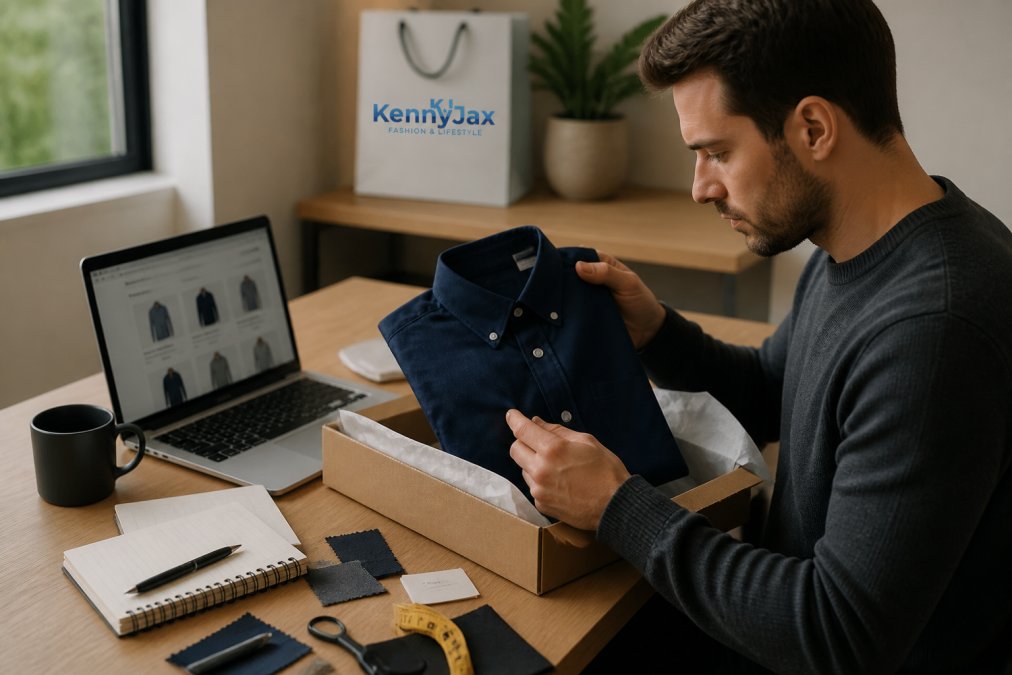
Reading Fabric Composition and Garment Construction Details
Start with the fiber breakdown. Natural fibers like cotton, wool, and linen breathe well and age gracefully, while synthetics add stretch or wrinkle resistance. Blends aren't automatically bad, but the ratio matters: a mostly-polyester shirt with a touch of cotton feels different after ten washes than a mostly-cotton one.
- Fabric weight (GSM). GSM means grams per square meter. A lightweight summer t-shirt sits around 140-160 GSM, an everyday tee around 180-200 GSM, and a heavy, structured tee at 220 GSM and up. Heavier fabric drapes better, holds its shape, and resists the see-through look of cheap cotton. If a listing doesn't publish GSM, treat that as a soft signal, but ask.
- Yarn and weave. Two-ply cotton yarn (two strands twisted together) is stronger and smoother than single-ply, so it resists pilling. For button-downs, a tighter weave like poplin reads dressier and resists wrinkles; oxford is heavier, more casual, and wears longer. For denim, look for selvedge or a stated ounce weight, 12-14 oz is a solid everyday weight; 10 oz and under tends to bag out.
- Fiber ratio. A small percentage of elastane (often 1-5%) adds recovery and comfort without wrecking durability. A high polyester share in a "cotton" shirt is cost-cutting, not a performance feature, unless the garment is explicitly built for travel or moisture management.
Spotting Red Flags in Product Photos and Descriptions
Vague descriptions are the biggest warning sign. If a listing says "premium fabric" without naming the fiber, that's a gap. Real quality sellers specify composition because it's a selling point, not something to hide.
Other red flags:
- Only one photo, or photos that look heavily filtered
- No close-ups of stitching, buttons, or hems
- Reviews that mention fit issues repeatedly
- No sizing chart, just "fits true to size"
- A price that's dramatically below comparable 100% cotton or wool pieces, something has to give, and it's usually the fabric weight or the seam construction
A Quick Grading Framework
When comparing two similar pieces, score each on four questions:
- Is the fiber named, and is the dominant fiber natural?
- Is the fabric weight stated or inferable from the description?
- Are construction details (stitching, buttons, seams) mentioned or shown?
- Do reviews mention longevity, not just fit?
Men's Apparel Size Guide: Getting the Right Fit Every Time
The most reliable way to get the right fit online is to measure your body and compare those numbers against the retailer's specific size chart, not your usual size at another store. Sizing varies widely between brands, so "medium" means something different everywhere.
Measuring Yourself at Home for Accurate Sizing
You'll need a soft tape measure and a mirror, or a friend for back measurements. Here's the order that works:
- Chest: Measure around the fullest part, keeping the tape level.
- Waist: Measure at your natural waistline, not where your pants sit.
- Inseam: Measure from crotch to ankle bone on pants that already fit well.
- Neck: Measure around the base of your neck, adding half an inch for comfort.
- Sleeve: Measure from shoulder seam to wrist bone.
Translating Sizing Across US, EU, and UK Standards
A rough map for tops (jackets, shirts, sweaters):
| US | EU | UK |
|---|---|---|
| S | 46 | 36 |
| M | 48-50 | 38-40 |
| L | 52 | 42 |
| XL | 54-56 | 44-46 |
For trousers, the mismatch is worse because the systems measure different things. US sizing is usually waist-in-inches (e.g., 32 x 32). EU sizing is often a numeric waist in centimeters (e.g., 48). UK trouser sizing frequently mirrors US waist inches but runs slimmer through the seat and thigh. A US 32 waist is roughly an EU 48, but the same labeled size can differ by an inch or more between brands.
Three practical rules cut return rates dramatically:
- Trust the chart, not the letter. Always open the specific retailer's size chart and match your chest, waist, and inseam numbers to it. Brand charts are the only authority that matters for that brand.
- Check the model stats. Most quality retailers list the model's height, weight, and the size worn. If a 6'1" model wearing a medium looks fitted, and you're 6'1" and want room, size up.
- Look for garment measurements, not just body measurements. Chest width, shoulder width, and body length in inches tell you more than a size letter ever will, because they describe the actual garment rather than the body it's meant for.
When to Buy Slim, Regular, or Relaxed
Fit labels aren't standardized either. "Slim" at one brand can equal "regular" at another. If a retailer offers multiple fits, read each description rather than assuming. When in doubt, order your usual fit plus one alternative in the same piece if returns are free, one delivery tells you more than three separate orders.
Reducing Returns Before They Happen
A few habits keep the return cycle short:
- Save your measurements in a phone note so you never re-measure in a fitting room.
- Keep a running list of which brands fit you well and in what size, your personal size chart.
- For structured pieces (suits, coats, blazers), budget for a tailor. A $20-$40 alteration beats returning three sizes hunting a perfect off-the-rack fit.
- If a brand's chart is missing or vague, that signals how much they care about fit, and often about the garment itself.
Durable Fabrics for Men's Clothing: What Lasts and What Doesn't
The fabrics that hold up longest usually have the simplest composition: 100% cotton, wool, linen, and quality denim. Blends work too, especially when a small percentage of elastane adds comfort without sacrificing durability.
Here's a quick reference for what to expect:
| Fabric | Durability | Best For |
|---|---|---|
| 100% cotton | High | T-shirts, button-downs, chinos |
| Merino wool | High | Sweaters, suiting, base layers |
| Linen | Medium | Summer shirts, lightweight trousers |
| Polyester blends | Varies | Activewear, wrinkle-resistant travel pieces |
| Cheap cotton-poly | Low | Fast fashion basics that fade fast |
Returns, Shipping, and Customer Service: Protecting Your Purchase
A generous returns policy is one of the strongest signals a retailer stands behind its product. Before you buy, check three things: who pays return shipping, how long you have to return, and how long refunds take.
Building a Capsule Wardrobe with Quality Men's Apparel
A capsule wardrobe is a small, intentional collection of versatile pieces that mix and match across most occasions. The goal isn't fewer clothes for their own sake, it's fewer decisions and better outfits from a tighter rotation.
Start with these core pieces:
- Two pairs of well-fitting chinos or dark denim
- Three to four quality t-shirts in neutral colors
- One white and one light-blue button-down
- A versatile jacket or blazer
- One pair of leather shoes and one pair of clean sneakers
Wardrobe planning guidance from a leading personal styling resource
When to Buy New vs. Shop Second-Hand and Resale
Buy new for pieces you'll wear constantly and need to last: everyday shoes, work shirts, structured outerwear. Buy second-hand for statement pieces, seasonal items, or anything you're still testing whether you like.
Conclusion
Getting fit, fabric, and returns right takes a little upfront work, but it saves you from the return-cycle frustration that plagues most online shopping. KennyJax handpicks every piece in our collection, offers free shipping with delivery in 2-3 days, and covers free returns so you can try things with confidence. Get started with KennyJax and build a wardrobe you actually reach for every morning.
Frequently Asked Questions
What should I look for when buying men's clothing online?
Check three things before ordering: fabric composition (look for natural fibers like cotton, wool, or linen), garment construction details (stitching, buttons, seams), and the retailer's return policy. Read customer reviews that mention fit and durability, not just style. A detailed size chart and clear product photos from multiple angles are signs of a trustworthy seller. If a listing has vague fabric descriptions or no sizing guide, proceed with caution.
How do I identify durable fabrics when shopping for men's clothes?
Look for higher fabric weights and natural fibers. Cotton twill, wool blends, and linen last longer than thin synthetic mixes. Check the GSM (grams per square meter) if listed; anything above 180 GSM for shirts signals better durability. Avoid fabrics described only as 'polyester blend' without specifics. Reviews mentioning pilling, fading, or seam separation after a few washes are warning signs that the fabric won't hold up over time.
How can I ensure the quality of men's apparel before purchasing?
Request or review close-up photos of stitching, buttons, and fabric texture. Look for reinforced seams at stress points like shoulders and pockets. Check whether the retailer provides a fit guide with actual garment measurements, not just S/M/L labels. Read the return policy carefully; a free returns policy removes most of the risk. Brands that handpick their inventory and describe fabric composition in detail tend to offer more consistent quality than mass-market listings.
What are the best practices for measuring yourself for online clothing orders?
Use a soft tape measure and take three key measurements: chest (around the fullest part), waist (at your natural waistline, not where your jeans sit), and inseam (from crotch to ankle bone). Measure over light clothing, keep the tape snug but not tight, and write everything down. Compare your numbers to the retailer's specific size chart, not a generic one. If you fall between sizes, size up for casual wear and consider tailoring for formal pieces.