

How to Read Online Sizing Charts (2026 Fit Guide)
Table of Contents
- What a Size Chart Actually Tells You (and What It Doesn't)
- How to Measure Your Body for Clothing at Home
- Garment Measurements vs Body Measurements: Why the Numbers Don't Match
- How to Read Online Sizing Charts Step by Step
- Why Size Charts Vary by Brand (and How to Handle It)
- Fabric Stretch, Size Tolerance, and Fit Notes That Change Everything
- Tips for Buying Clothes Online Without the Guesswork
- Conclusion
- Frequently Asked Questions
Last Updated: October 2, 2026
What a Size Chart Actually Tells You (and What It Doesn't)
Learning how to read online sizing charts starts with one hard truth: those numbers describe the garment, not your body. A size chart is a set of flat measurements taken across a piece of clothing, plus a suggested body range for each size.
Here's what a chart usually gives you:
- Body measurements: the range a size is built for
- Garment measurements: the actual dimensions of the finished piece
- Fit notes: whether the item runs small, loose, or true to size
How to Measure Your Body for Clothing at Home
Grab a flexible tape measure and a mirror. Stand straight, breathe normally, and keep the tape snug but not tight, bulky clothes add inches you don't have.
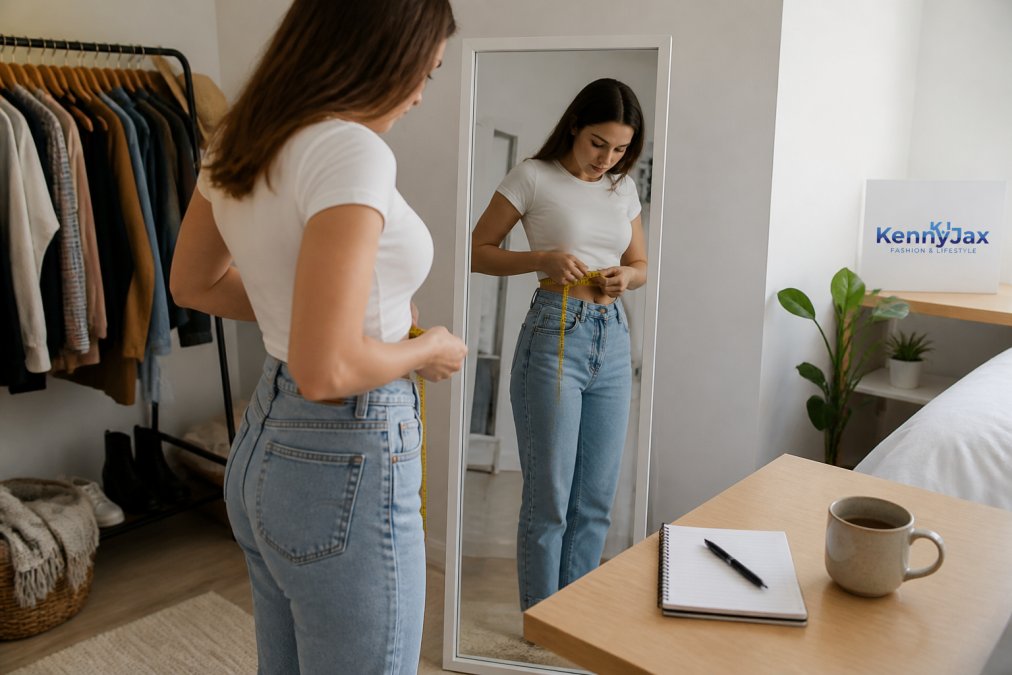
Follow these steps:
- Wear light clothing or fitted layers.
- Keep the tape level all the way around.
- Write every number down as you go.
- Measure twice and use the larger number if they differ.
Bust, Waist, and Hip: The Three Numbers That Matter Most
These three drive most size charts. Get them right and you solve most of the puzzle.
- Bust: measure around the fullest part, keeping the tape level across your back.
- Waist: find your natural waist, the narrowest point above your belly button.
- Hip: measure around the fullest part of your seat, feet together.
Inseam, Shoulder, and Sleeve: Secondary Measurements Worth Taking
Secondary numbers matter for pants, jackets, and tailored cuts.
- Inseam: from the crotch seam to where you want the hem to fall.
- Shoulder: across your back, from one shoulder point to the other.
- Sleeve: from shoulder point to wrist, arm slightly bent.
These take two minutes and save a return later.
Garment Measurements vs Body Measurements: Why the Numbers Don't Match
Garment measurements vs body measurements is the concept most shoppers skip, and it explains every "why doesn't this fit" moment. Body measurements describe you; garment measurements describe the clothing laid flat.
What Wearing Ease and Design Ease Mean for Fit
Wearing ease is the extra room added so you can move, sit, and breathe. Design ease is extra room a designer adds on purpose to create a look.
How to Read Online Sizing Charts Step by Step
Reading online sizing charts takes about two minutes once you know the order of operations, and the order matters, because the biggest cause of a bad fit is comparing the wrong number to the wrong number. Here's the process we recommend to every KennyJax shopper.
- Find your three core numbers. Use your bust, waist, and hip measurements. Write them down in inches, not your usual dress size. A dress size is a label; a measurement is a fact.
- Check whether the chart lists body or garment measurements. This changes everything. Body measurements describe the range a size is built for. Garment measurements describe the flat dimensions of the finished piece. If the chart doesn't say which one it is, assume garment measurements and double the width numbers.
- Match your largest measurement first. If your hips and waist fall in different sizes, size to the larger one. A tailor can take in a waist. Adding fabric to a hip is not a realistic alteration.
- Read the fit notes. Look for "runs small," "relaxed," or "true to size." These notes usually reflect the maker's own pattern block, not a universal standard.
- Check the fabric. Stretch changes how much wiggle room you have. A knit with 5% spandex behaves nothing like a rigid linen.
- Look at the model stats. Model height and the size she's wearing tell you how the garment drapes on a real body, not a mannequin.
- Compare your number to the size range, not the label. A "large" means nothing on its own. The inch range is the only thing that travels between brands.
| Step | What to Check | Why It Matters |
|---|---|---|
| 1 | Bust, waist, hip | Your base numbers in inches |
| 2 | Body vs garment | Avoids comparing two different things |
| 3 | Largest measurement | Prevents a too-tight fit at the widest point |
| 4 | Fit notes | Flags maker-specific pattern quirks |
| 5 | Fabric stretch | Adds or removes functional room |
| 6 | Model stats | Shows real drape on a body |
| 7 | Size range | Labels vary; inches do not |
The Ease Check: Why Your Number and the Garment Number Differ
Here is the step most guides skip. When you compare your body measurement to a garment measurement, the difference is called ease. Knowing which kind you're looking at explains almost every fit surprise.
A Worked Example
Suppose your bust is 38 inches and the chart lists a garment chest measurement of 42 inches flat. Double the flat number: 42 inches around. Subtract your bust: 4 inches of ease, between fitted and relaxed, likely a standard crewneck tee. A 39-inch garment chest gives 1 inch of ease, a compression fit. Unless the fabric is a stretch knit, size up.
Why Size Charts Vary by Brand (and How to Handle It)
There is no standardized sizing system in clothing. Each maker builds its own blocks, so a medium from one label can match a small from another.
How to handle it:
Elegant Women's Plus Size Evening Gown →
- Ignore the letter on the tag and trust the numbers.
- Keep a note of which makers run small or large for you.
- Re-measure every year or so, since bodies change.
- When in doubt, check the return policy before you buy.
Fabric Stretch, Size Tolerance, and Fit Notes That Change Everything
Fabric composition has more impact on fit than most shoppers realize. Two dresses in the same size can feel completely different based on what they're made of, stretch changes how much ease a garment actually needs.
How Fiber Content Changes the Ease Math
A rigid woven fabric, 100% cotton poplin, linen, or stiff denim, has almost no give. If the garment measurement is only 1 inch larger than your body at the bust, it will pull when you raise your arms. For rigid fabrics, treat 2 inches of ease as the practical minimum at the bust and hip, and 1 inch at the waist.
A common pattern is roughly this:
- Rigid wovens (linen, cotton poplin, denim without stretch): need the full 2 inches of wearing ease at bust and hip. Size up if the chart shows less.
- Low-stretch knits (2-3% elastane): can get by with 1 inch of ease. Follow the chart closely.
- High-stretch knits (5% or more elastane, or ribbed jersey): can fit with zero or negative ease. The chart's body range is usually the better guide here than the flat garment measurement.
- Performance and athletic fabrics: often engineered with 4-way stretch and may run intentionally tight. Read the fit notes before sizing down.
Size Tolerance: Why Two Items in the Same Size Differ
Size tolerance is the small range a maker allows between pieces during cutting and sewing, roughly a quarter inch to half inch on most measurements, which is normal, not a defect. That's why two medium shirts from the same brand can feel slightly different, and why a single "runs small" review isn't always reliable; that reviewer may have received a piece at the tight end of the range.
Care Notes and Shrinkage
Fabrics that shrink in the wash will fit differently later, cotton and linen are the usual suspects. "Wash cold, tumble dry low" means minimal shrinkage; "machine wash warm" means the garment tightens slightly after the first wash, which matters most for rigid wovens with little ease to spare.
Look for these clues in the listing:
- Stretch percentage: higher stretch means more forgiveness and less need to size up.
- Fiber content: natural fibers like cotton and linen shrink; synthetics like polyester and nylon hold their shape.
- Size tolerance: the small range a maker allows between pieces, usually a fraction of an inch.
- Care notes: fabrics that shrink in the wash will fit differently later.
Never judge fit from the size label alone. A "small" in a stretchy knit can fit looser than a "medium" in a stiff woven fabric. Skipping the fabric check is the fastest route to a return. If the chart shows less than 2 inches of ease at the bust or hip and the fabric is rigid, size up.
When the Garment Arrives and Doesn't Fit
Even with careful chart reading, sometimes the fit is off. Before starting a return, run this checklist:
- Re-measure the garment flat. Lay it on a table and compare to the chart. If it's outside the stated tolerance, the issue is the garment, not your reading.
- Check the ease again. Did you account for stretch? A rigid fabric with 1 inch of ease will feel tight even if the chart said it was your size.
- Try it with the intended undergarments. A different bra can change the bust fit by an inch or more.
- Wash it once if the fabric is known to shrink. Some cotton and linen pieces relax into the right fit after a single cold wash.
- If it still doesn't work, return it, and note the maker and size in your running list. That note is what turns a return into a better next order.
Tips for Buying Clothes Online Without the Guesswork
Buying clothes online gets easier once you build a small system. These habits cut returns and boost your hit rate.
- Save your measurements in a notes app.
- Screenshot the size chart for anything you order.
- Read the fabric and fit notes before the photos.
- Check the return window and who pays return shipping.
- Buy two sizes when you're truly stuck, then return one.
- Keep a running list of which makers fit you well.
Conclusion
Sizing charts aren't perfect, and no chart can promise a flawless fit on its own. But once you know your numbers and understand the difference between body and garment measurements, the guesswork mostly disappears.
Frequently Asked Questions
How do I accurately measure my body for online clothing?
Use a flexible tape measure and wear light clothing or undergarments. Keep the tape snug but not tight against your skin. Measure your bust at the fullest point, your waist at the narrowest point (usually just above the belly button), and your hips at the widest point. Write each number down in inches. Measure twice to confirm accuracy. If you are between sizes, size up for a looser fit or check the garment measurements for more detail.
What is the difference between garment measurements and body measurements?
Body measurements are the dimensions of your actual body, taken with a tape measure. Garment measurements are the flat-lay dimensions of the clothing itself. A size chart based on body measurements tells you what body the garment is designed for. A chart based on garment measurements tells you the physical dimensions of the fabric. Always check which type the brand uses. If a chart lists a 40-inch chest for a size medium, that is the body measurement target, not the shirt's flat width.
Why do clothing sizes vary so much between different brands?
There is no single standardized sizing system in the United States. Each brand develops its own size range based on its target customer, fit philosophy, and manufacturing tolerances. A medium at one retailer may match a small at another. This is why reading the specific size chart for each brand matters more than relying on the letter on the tag. When in doubt, compare your body measurements to the brand's chart rather than assuming your usual size will work.
Should I prioritize chest, waist, or hip measurements when buying online?
It depends on the garment. For tops and dresses, prioritize bust and waist. For pants and skirts, prioritize waist and hip. For fitted garments, all three matter. If a piece is form-fitting, your largest relevant measurement should guide your size choice because you can always have a garment taken in but letting it out is harder. For a relaxed fit, you have more flexibility. Always check the fit notes and model height listed on the product page for additional context.